ISO capacity building case studies showcase how targeted interventions translate into real, measurable impact for developing countries. They highlight how National Standards Bodies (NSBs) are strengthened to operate more effectively, how experts from developing countries actively contribute to shaping International Standards, and how the practical implementation of ISO standards supports market access, quality improvement, and sustainable development. Through concrete country examples, these case studies bring to life the transformative role of standards in driving inclusive growth and building resilient national systems.

The case studies for the GSP eLearning course, National Standardization Strategies (NSS) and the Least Developed Countries (LDC) programme demonstrate how capacity-building interventions can lead to measurable improvements in NSBs' performance. They highlight how GSP learning can be applied to strengthen standardization processes, how strategic NSS frameworks can be developed through training and mentoring, and how targeted technical assistance can enhance institutional capabilities in developing countries.
Good standardization practices (GSP) case studies
The GSP case studies demonstrate how learners who have successfully completed the GSP eLearning course have applied the knowledge, skills and insights they acquired to enhance their NSB's core and supporting activities.

Unleashing the power of standards - Using the NSS to reach their maximum potential
The ongoing ISO capacity-building programme on National Standardization Strategies (NSSs) supports National Standards Bodies (NSBs) in translating the concept of an NSS into practical action, through training sessions and mentoring. These case studies demonstrate the benefits of developing and implementing an NSS at a national level.

To be published soon
LDC programme
The ISO LDC Programme was launched in 2021 and provided support on the most important and strategic areas needed to strengthen NSB institutional capacity. Spanning across 8 LDC countries, the programme concluded in 2025 and captured the results and achievements. These are reflected in the LDC Programme final publication.
Enabling the participation of developing countries in international standardization work is supported through the ISO sponsorship programme and associated capacity building journeys. The case studies demonstrate that such participation lays the foundation for the effective use of ISO standards. They also highlight the importance of including developing countries in international standard-setting processes, contributing to ISO’s strategic goal of ensuring that “all voices are heard.”
Empowering Tanzania’s renewable energy sector through ISO sponsorship
This case study highlights how the ISO Sponsorship Programme strengthened Tanzania’s renewable energy sector by enabling their participation in international standardization, which resulted in the application of ISO standards to improve national projects, policies, and institutional capacity.

Benefits of participating in the development of International Standards on the circular economy
This video shows how ISO supports developing countries by building their skills and helping them to overcome resource barriers. This enables them to participate in the development of standards and find global solutions, such as the circular economy.
These case studies demonstrate the benefits of implementing ISO standards, showcasing capacity-building initiatives that support their adoption across diverse sectors and contexts. They show how standards such as ISO 19867 for clean cookstoves, ISO 50001 for energy management systems and ISO 22000 for food safety management systems, as well as the ISO CASCO toolbox, can enhance compliance, strengthen national systems, improve product and service quality and facilitate market access.
SMEs implementing energy management systems
This collection of planet result stories shows how ISO 50001 (energy management) help organizations reduce their energy consumption, resulting in reduced CO2 emissions and savings in cost. The result stories for ISO 14046 (environmental management: water footprint) demonstrate the benefits of measuring water use, to address water scarcity.

SMEs implementing food safety management systems
This collection of people’s result stories shows how ISO 22000 supports small food producers in managing food safety, reducing contamination risk, and minimizing food loss and waste. Implementing ISO 22000 also contributes to increased sales and expanding market share

Sector driven market access using standards and conformity assessment
These case studies demonstrate that implementing International Standards and strengthening conformity assessment systems is crucial to effectively support export sectors, ensure the acceptance of conformity assessment results, and enhance competitiveness. They emphasize the importance of proactive alignment with International Standards, stronger institutional capacity and improved coordination across the pillars of the quality infrastructure to reduce trade barriers, build trust and enable sustainable market access and higher-value exports.
Turning an anti-corruption mandate into implementable practice through ISO standards in Indonesia
This case study demonstrates how the adoption of the international standard ISO 37001 at a national level helped to operationalize Indonesia's anti-corruption objectives. It also demonstrates how BSN, Indonesia's ISO member, enabled large-scale implementation by convening stakeholders and establishing certification and accreditation pathways that ensure long-term adoption is verifiable and credible.
To be published soon
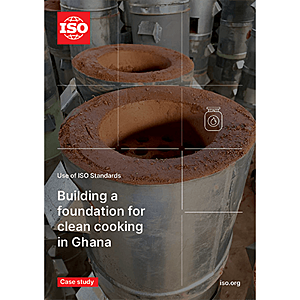
Building a foundation for clean cooking in Ghana
This case study shows how ISO standards and capacity‑building efforts supported Ghana in adopting clean cooking solutions by strengthening testing capacity, improving regulations, and enhancing cookstove performance, leading to better health, environmental, and energy outcomes.